Common Types of Misinformation Explained: How to Recognize False and Misleading Content Online
Not all misinformation looks the same. From misleading headlines and manipulated media to deepfakes and fabricated stories, learn the most common types of misinformation and how to recognize them before they spread.
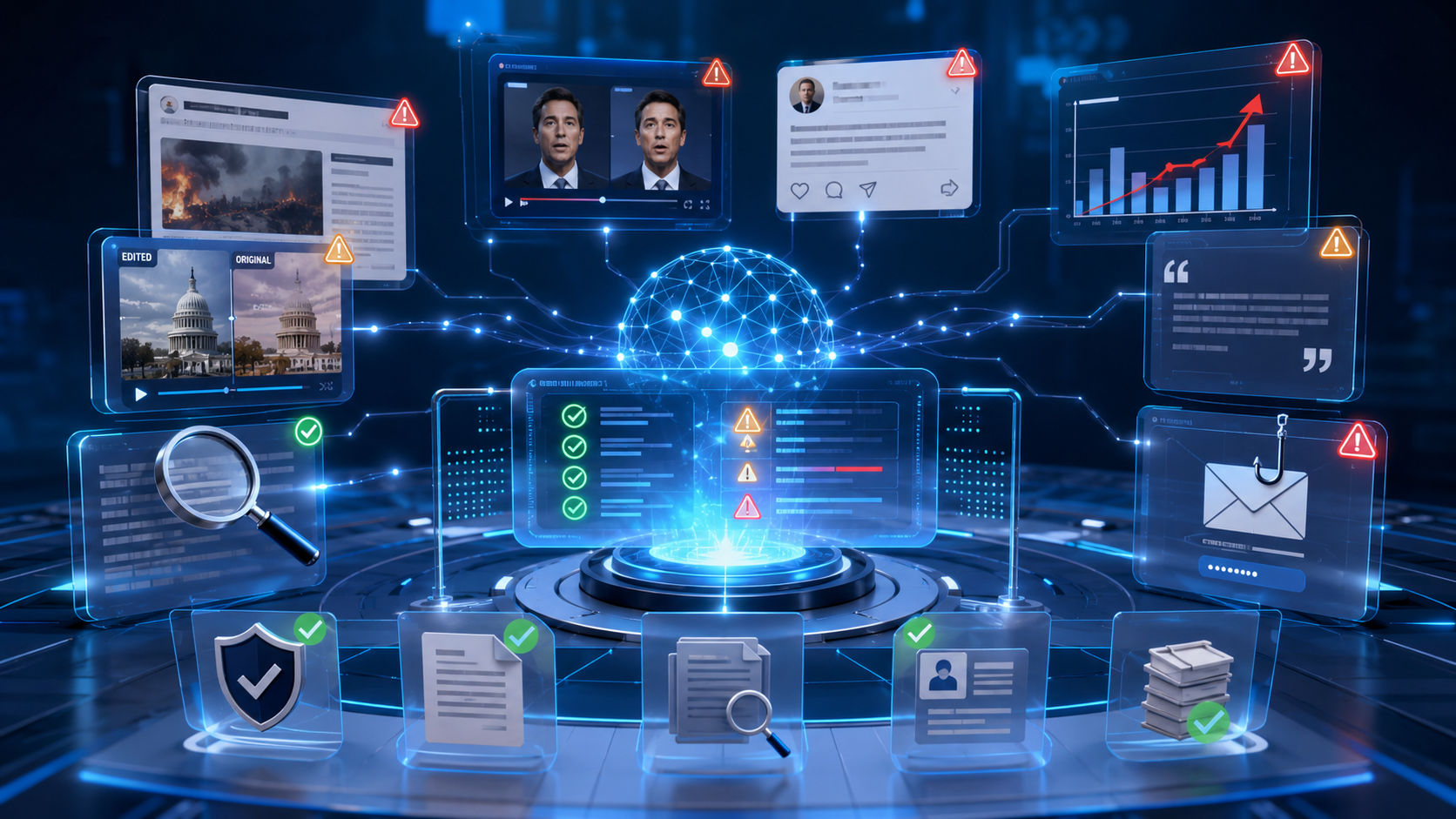
Common Types of Misinformation Explained
Every day, billions of pieces of content are shared across social media, messaging apps, blogs, and news websites. While much of this information is accurate, a significant portion is misleading, taken out of context, or entirely false.
Misinformation doesn't always appear as an obvious fake news article. It can be a manipulated image, a misleading headline, an edited video, an AI-generated deepfake, or even a true fact presented without important context.
Understanding the different types of misinformation is one of the most effective ways to become a smarter and more responsible internet user.
In this guide, we'll explore the most common forms of misinformation, explain how they spread, and share practical tips for identifying them.
What Is Misinformation?
Misinformation is false, inaccurate, or misleading information that is shared regardless of whether the person sharing it intends to deceive others.
People often spread misinformation because they:
- Believe it is true
- Want to warn friends and family
- Share content without verifying it
- Misunderstand the original source
- React emotionally to sensational claims
Unlike deliberate deception, misinformation is frequently shared unintentionally.
Misinformation vs. Disinformation
Although the terms are often used interchangeably, they have different meanings.
Misinformation
False or misleading information shared without the intention to deceive.
Example:
Someone forwards an inaccurate health tip because they genuinely believe it is helpful.
Disinformation
False information intentionally created and distributed to deceive or manipulate people.
Example:
A fake news website publishes fabricated election results to influence public opinion.
Understanding this distinction helps explain why not everyone who shares false information has harmful intentions.
1. False or Fabricated News
This is one of the most recognizable forms of misinformation.
Fabricated news stories are completely invented but presented in a way that resembles legitimate journalism.
Common characteristics include:
- Anonymous authors
- Sensational headlines
- No credible sources
- Unsupported claims
- Emotional language
These stories are often designed to generate clicks, advertising revenue, or social media engagement.
2. Misleading Headlines (Clickbait)
Sometimes the article itself isn't entirely false—but the headline exaggerates or distorts the facts.
Examples include:
- Making ordinary events seem shocking
- Omitting important context
- Using emotionally charged wording
- Promising information the article doesn't provide
Many people share articles after reading only the headline, making clickbait particularly effective.
3. Content Taken Out of Context
Accurate information can become misleading when important context is removed.
Examples include:
- Old photos shared as recent events
- Quotes missing surrounding conversation
- Videos clipped before or after important moments
- Statistics presented without explanation
Always consider the full context before drawing conclusions.
4. Manipulated Images
Photo editing software makes it easy to alter images.
Manipulated images may involve:
- Removing people or objects
- Adding fake elements
- Changing colors or lighting
- Combining multiple photos
- Editing text within screenshots
Modern editing techniques can make these changes difficult to detect without careful analysis.
5. Edited or Misleading Videos
Videos often appear trustworthy because viewers can see events unfold.
However, videos may be misleading due to:
- Selective editing
- Cropped footage
- Altered playback speed
- Fake subtitles
- Added narration
- Edited audio
Watching the complete, original version often reveals missing context.
6. AI-Generated Deepfakes
Artificial intelligence can now generate highly realistic media.
Deepfakes may include:
- Fake speeches
- Synthetic interviews
- AI-generated faces
- Voice cloning
- Fabricated video footage
As AI technology improves, distinguishing real content from synthetic media becomes increasingly challenging.
7. Fake Statistics and Graphs
Numbers often appear convincing, even when they are inaccurate.
Warning signs include:
- Missing sources
- Unlabeled charts
- Selective data
- Misleading percentages
- Incorrect comparisons
Always verify statistics using official reports or reputable research organizations.
8. Fake Quotes
Public figures are frequently assigned quotes they never actually said.
These quotes often spread because:
- They sound believable.
- They match public expectations.
- They are shared widely without verification.
Whenever possible, trace quotations back to interviews, speeches, books, or official publications.
9. Impersonation and Fake Accounts
Scammers and misinformation campaigns sometimes create accounts that imitate:
- News organizations
- Government agencies
- Companies
- Celebrities
- Public officials
Small differences in usernames, logos, or website addresses can make fake accounts appear genuine.
Always verify official profiles before trusting their content.
10. Satire Mistaken for Real News
Satirical websites publish fictional stories for entertainment.
Problems arise when readers mistake satire for factual reporting and begin sharing it as real news.
Before reacting to surprising stories, check whether the publisher is known for satire or parody.
11. Scam Messages and Chain Posts
Messaging apps are common channels for misinformation.
Examples include:
- "Forward this to everyone you know."
- Fake government announcements
- Lottery scams
- Health myths
- Financial fraud
- Fake emergency alerts
Urgent language and requests to share immediately are common warning signs.
Why Misinformation Spreads So Easily
Several factors contribute to its rapid spread.
Emotional Reactions
People are more likely to share information that surprises, frightens, or angers them.
Confirmation Bias
People naturally trust information that supports their existing beliefs.
Social Media Algorithms
Highly engaging content often receives greater visibility regardless of its accuracy.
AI Content Generation
Modern AI tools can produce convincing text, images, audio, and videos at an unprecedented scale.
How to Identify Misinformation
Develop these verification habits whenever you encounter questionable content:
- Check the original source.
- Read beyond the headline.
- Verify publication dates.
- Compare multiple reliable sources.
- Look for supporting evidence.
- Examine images and videos carefully.
- Be skeptical of emotionally charged content.
- Question extraordinary claims.
Small verification steps can prevent the spread of large-scale misinformation.
How AI Fact-Checking Tools Can Help
AI-powered verification tools can assist by:
- Detecting factual claims
- Transcribing spoken content
- Comparing multiple trusted sources
- Identifying manipulated media
- Summarizing supporting evidence
- Highlighting inconsistencies
These tools make verification faster, but human judgment remains essential for evaluating complex topics.
Building Better Digital Literacy
Digital literacy means more than simply knowing how to use technology.
It involves understanding:
- How information is created
- How algorithms influence visibility
- How misinformation spreads
- How to evaluate evidence critically
- How to verify claims responsibly
These skills help people make informed decisions in an increasingly digital world.
Final Thoughts
Misinformation comes in many forms, and it continues to evolve as technology advances. From fake headlines and manipulated images to AI-generated deepfakes and fabricated statistics, misleading content can be difficult to recognize at first glance.
Fortunately, developing strong verification habits makes a significant difference.
By checking sources, questioning sensational claims, verifying context, and using AI-powered fact-checking tools responsibly, you can confidently navigate today's information landscape and help prevent misinformation from spreading further.