Why Fake News Spreads Faster Than the Truth: The Psychology Behind Online Misinformation
Fake news often spreads across social media faster than verified information. Discover the psychological, technological, and social reasons behind misinformation and learn how to stop becoming part of the problem.

Why Fake News Spreads Faster Than the Truth
Imagine opening your favorite social media app and seeing a shocking headline:
"Scientists discover a hidden planet approaching Earth!"
Within minutes, thousands of people have shared it. Some believe it's real. Others share it "just in case." Before long, millions have seen the post—even though the story is completely false.
This is how misinformation spreads online.
Fake news doesn't become popular because it's true. It becomes popular because it captures attention, triggers emotions, and encourages people to share before verifying the facts.
In this guide, we'll explore why fake news spreads so quickly, the psychology behind it, how social media algorithms amplify it, and what each of us can do to slow its spread.
What Is Fake News?
Fake news refers to false or misleading information presented as if it were factual news.
It may include:
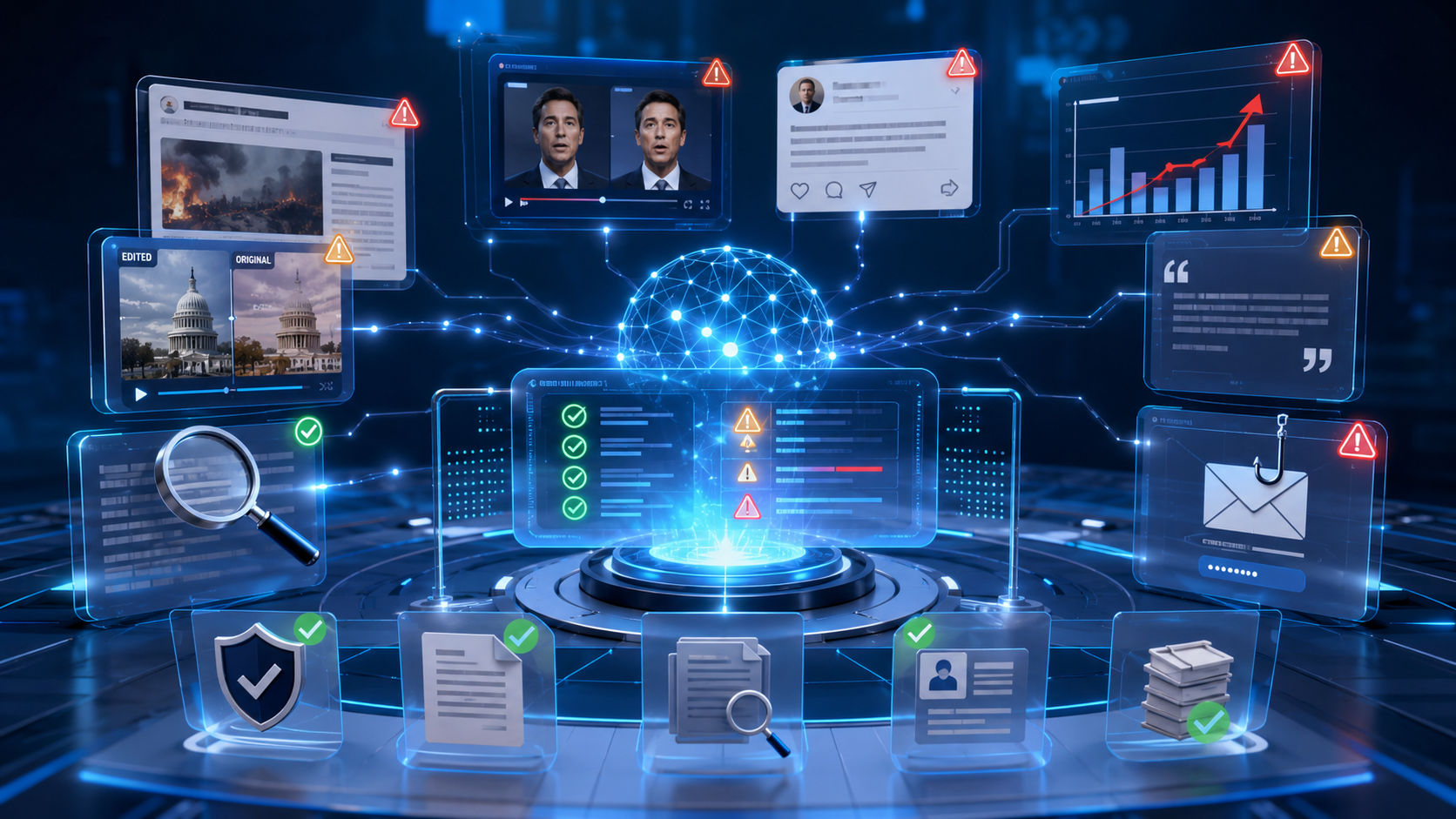
- Fabricated stories
- Edited or manipulated videos
- AI-generated images
- Misleading headlines
- False statistics
- Fake quotes
- Impersonated news websites
- Out-of-context photos and videos
Not all misinformation is created with harmful intent. Sometimes people unknowingly share inaccurate information because they believe it's true.
Why Fake News Travels So Fast
False information often spreads more quickly because it is designed to grab attention.
Many fake stories are intentionally crafted to make people feel:
- Shock
- Fear
- Anger
- Surprise
- Excitement
- Curiosity
These emotions increase the likelihood that someone will click, comment, or share without taking time to verify the information.
Truth, on the other hand, is often more detailed, nuanced, and less emotionally dramatic.
The Psychology Behind Sharing Misinformation
Human psychology plays a major role in the spread of fake news.
Emotional Reactions
People are more likely to share content that creates a strong emotional response.
Posts that make us angry or frightened often receive significantly more engagement than neutral information.
Confirmation Bias
People naturally prefer information that supports their existing beliefs.
If a story aligns with someone's opinions, they may accept it without carefully checking whether it's accurate.
This tendency is known as confirmation bias.
Social Proof
When thousands of people have already shared a post, it can appear more trustworthy.
Many users assume:
"If everyone is sharing it, it must be true."
Popularity, however, is not evidence of accuracy.
Fear of Missing Out (FOMO)
Breaking news creates urgency.
Many people share information immediately because they want to be among the first to report it, even before the facts have been confirmed.
How Social Media Algorithms Amplify Fake News
Social media platforms are designed to maximize engagement.
Algorithms often prioritize content that generates:
- Likes
- Comments
- Shares
- Watch time
- Reactions
Unfortunately, sensational misinformation frequently performs better than carefully verified reporting because it captures attention more effectively.
This doesn't necessarily mean platforms promote false information intentionally—it means highly engaging content often receives greater visibility.
The Role of AI in Misinformation
Artificial intelligence has made creating convincing fake content easier than ever.
Today, AI can generate:
- Realistic images
- Synthetic voices
- Deepfake videos
- Fake interviews
- Fabricated articles
- AI-generated social media posts
These technologies can be used creatively and responsibly, but they can also be misused to spread convincing misinformation at scale.
Why Corrections Spread More Slowly
Correcting misinformation is often much harder than creating it.
Reasons include:
- Fact-checking takes time.
- Reliable evidence must be verified.
- News organizations require confirmation before publishing.
- Corrections are usually less sensational than the original claim.
By the time a false story is debunked, millions of people may have already seen or shared it.
The Real-World Impact of Fake News
Online misinformation can have serious consequences.
It can:
- Influence public opinion
- Affect elections
- Damage reputations
- Spread health misinformation
- Encourage financial scams
- Increase public panic
- Reduce trust in reliable institutions
Even seemingly harmless misinformation can contribute to widespread confusion.
How to Identify Fake News
Before believing or sharing a story, ask yourself:
Who Published It?
Is the source reputable and transparent?
Does It Cite Evidence?
Reliable reporting usually includes references, expert opinions, or official statements.
Is the Headline Sensational?
Headlines designed purely to provoke strong emotions deserve extra scrutiny.
Are Other Trusted Sources Reporting the Same Story?
If only one unfamiliar website is making extraordinary claims, proceed with caution.
Is the Content Current?
Old stories often resurface and are shared as though they are new.
Always check publication dates.
How AI Fact-Checking Tools Can Help
Modern AI-powered fact-checking tools can assist users by:
- Extracting factual claims
- Comparing information across trusted sources
- Detecting inconsistencies
- Identifying manipulated media
- Providing evidence summaries
- Highlighting unsupported claims
While AI can speed up verification, it should complement—not replace—critical thinking and reliable sources.
What You Can Do to Stop the Spread
Everyone plays a role in creating a healthier online information ecosystem.
Simple habits can make a significant difference:
- Pause before sharing.
- Read beyond the headline.
- Verify the original source.
- Compare multiple trusted sources.
- Check dates and context.
- Question emotionally charged content.
- Use AI verification tools responsibly.
Sharing responsibly is one of the easiest ways to reduce the spread of misinformation.
Building Better Digital Literacy
Digital literacy isn't just about knowing how to use technology—it's about understanding how information is created, shared, and consumed.
Developing strong verification habits helps you:
- Make informed decisions
- Recognize manipulation
- Avoid scams
- Protect friends and family
- Contribute to more trustworthy online conversations
These skills are becoming increasingly important in a world where AI-generated content is more accessible than ever.
The Future of Fighting Misinformation
Researchers, technology companies, educators, and journalists are developing new tools to reduce the spread of false information.
Future innovations may include:
- Real-time misinformation alerts
- Improved AI-powered verification
- Better deepfake detection
- Source credibility indicators
- Cross-platform fact-checking
- Transparent AI reasoning systems
Technology alone won't solve misinformation, but combined with informed users, it can significantly improve the quality of information online.
Final Thoughts
Fake news spreads faster than the truth because it appeals to human emotions, takes advantage of psychological biases, and benefits from the speed of modern social media platforms.
The good news is that every individual has the power to slow its spread.
By verifying information, questioning sensational claims, checking trusted sources, and thinking critically before sharing, you become part of the solution rather than part of the problem.
In today's digital world, responsible sharing isn't just good practice—it's an essential skill for protecting yourself and others from misinformation.