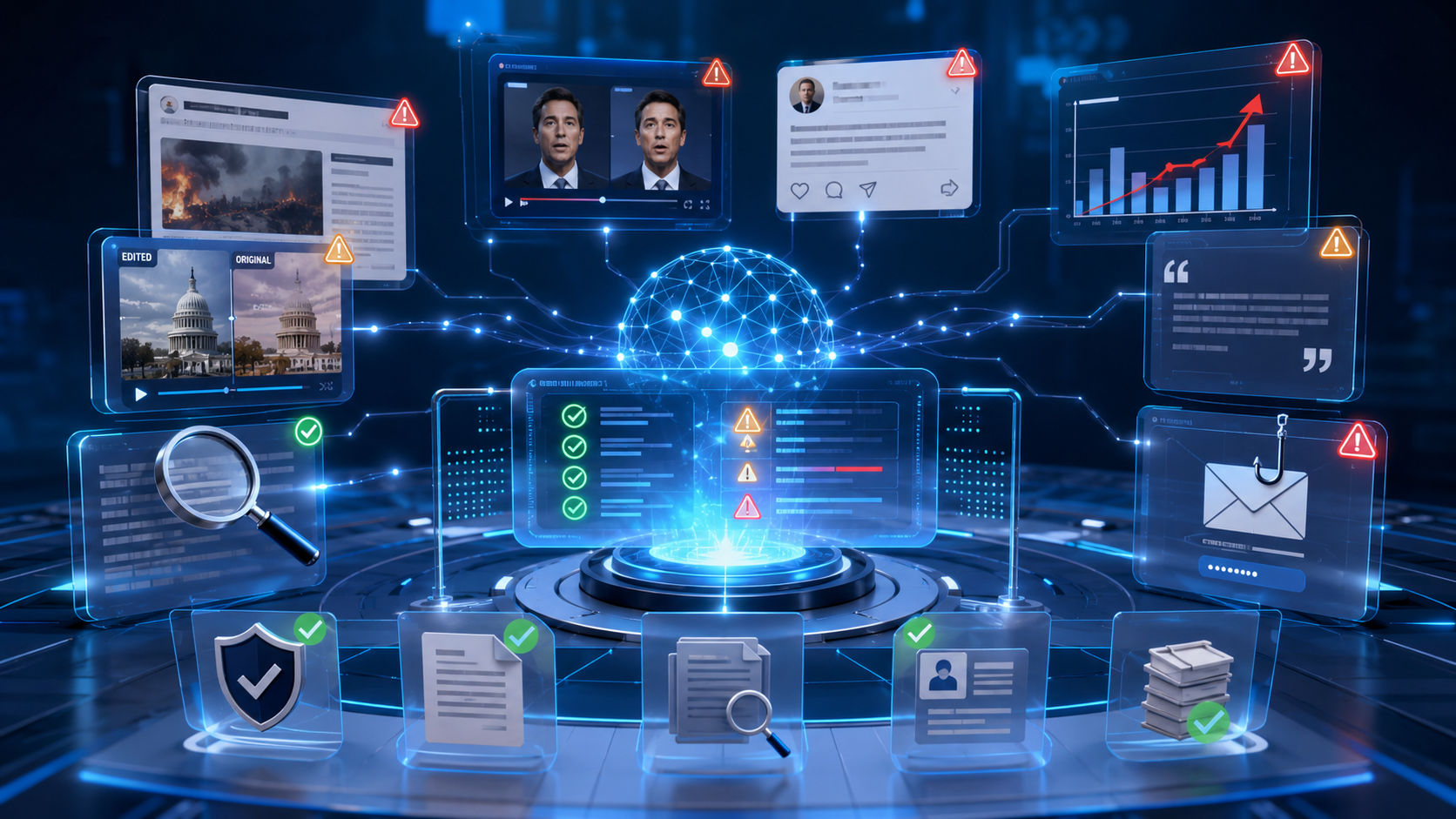
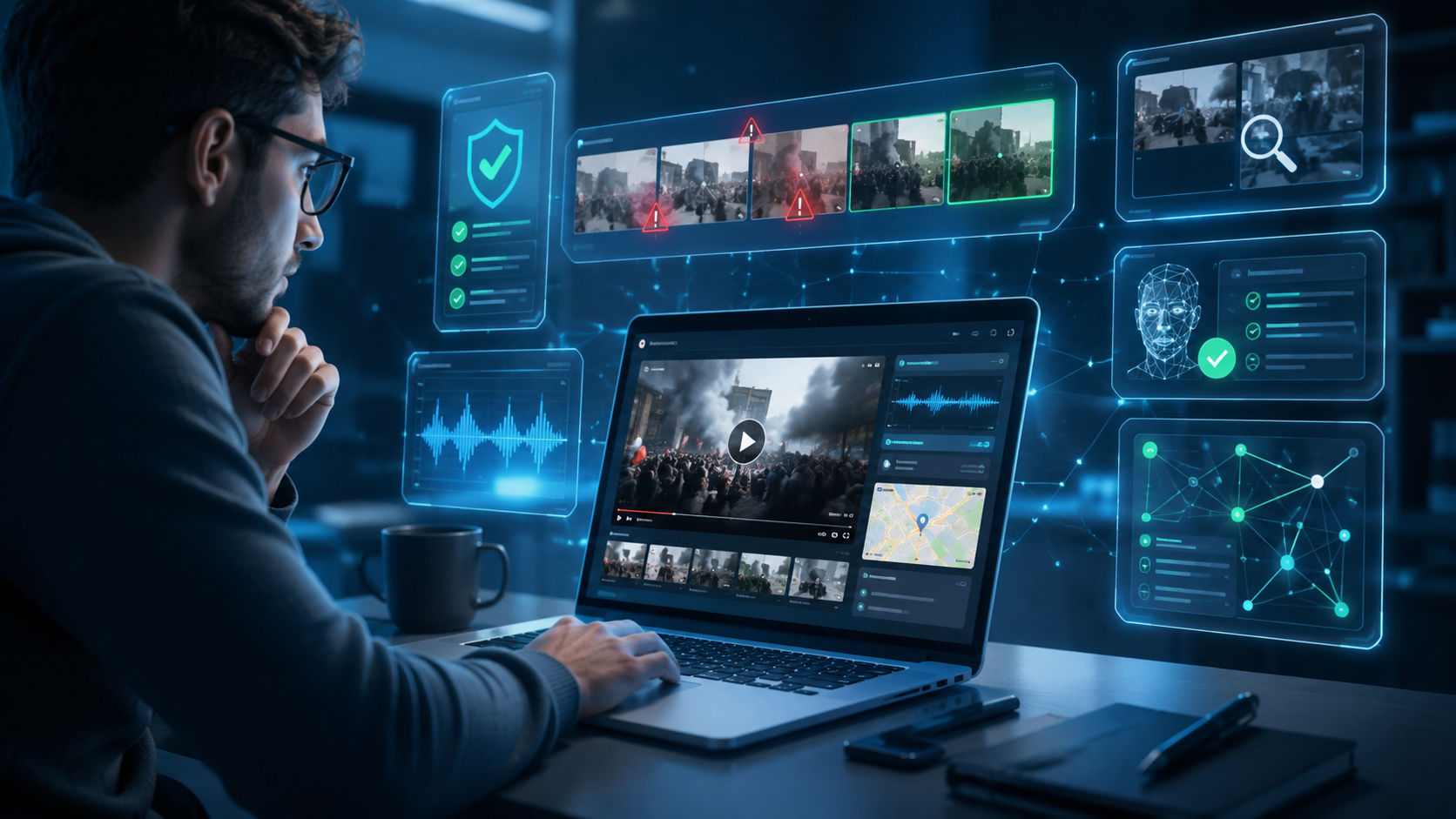
What Is AI Fact Checking? Everything You Need to Know About How It Works
Artificial intelligence is transforming how misinformation is detected online. Learn what AI fact checking is, how it works, its limitations, and why combining AI with reliable evidence is becoming essential in today's digital world.
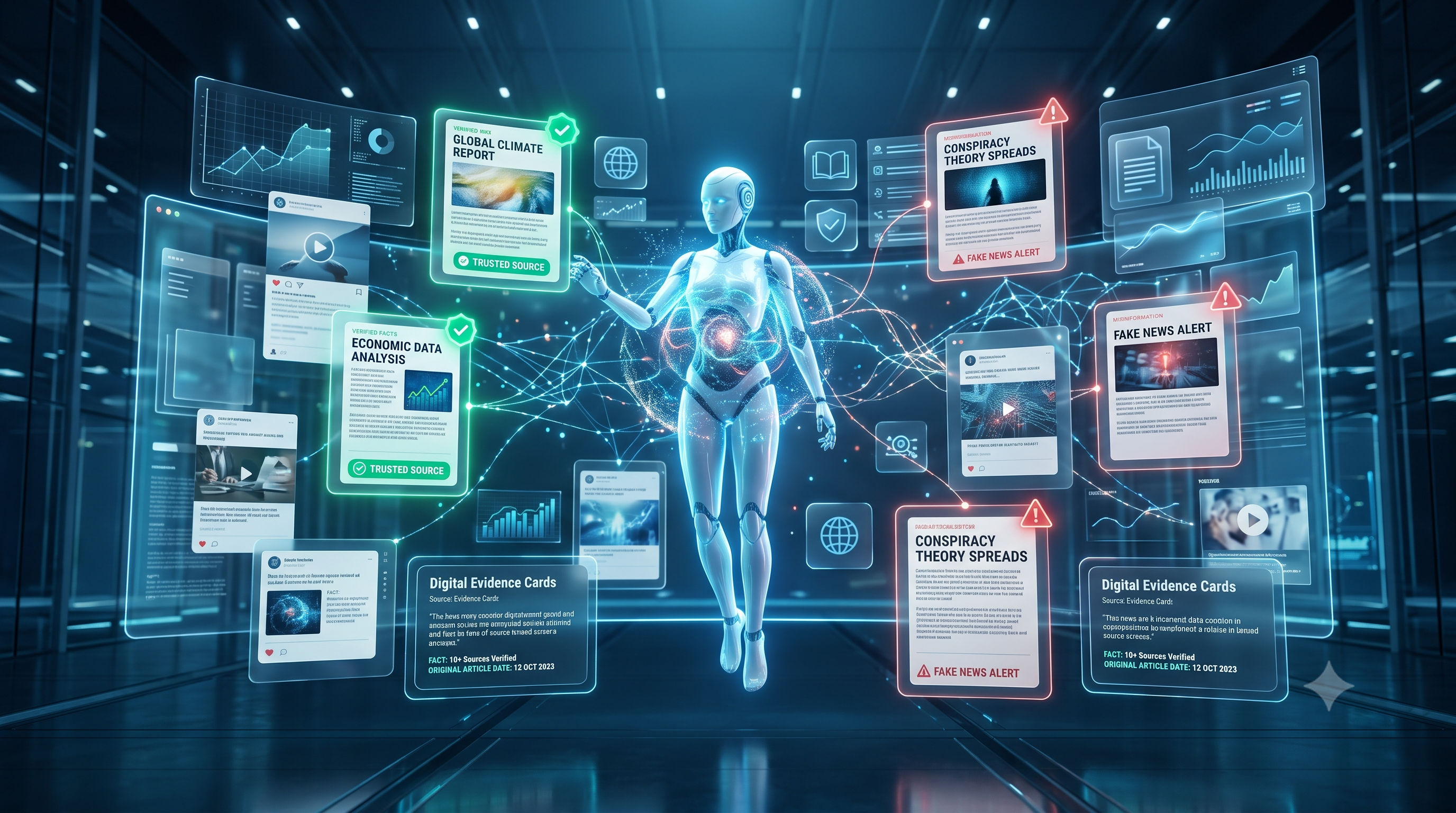
What Is AI Fact Checking? Everything You Need to Know About How It Works
Every day, millions of videos, images, articles, and social media posts are shared across the internet. While this makes information more accessible than ever, it also allows misinformation to spread at an incredible speed.
False health advice, manipulated videos, fake quotes, AI-generated images, and misleading news can reach thousands or even millions of people before traditional fact-checkers have a chance to respond.
This is where AI fact checking comes in.
Artificial intelligence is helping identify questionable claims, analyze content, search trusted sources, and assist people in determining whether information is accurate. While AI cannot replace human judgment, it has become one of the most powerful tools for fighting misinformation.
In this guide, we'll explain what AI fact checking is, how it works, its advantages, limitations, and what the future looks like.
What Is AI Fact Checking?
AI fact checking is the process of using artificial intelligence to evaluate whether a statement, claim, article, video, or piece of online content is supported by reliable evidence.
Instead of relying entirely on human reviewers, AI systems can:
- Detect factual claims
- Search trusted sources
- Compare conflicting information
- Analyze context
- Generate evidence summaries
- Highlight claims that require human verification
The goal isn't simply to label content as "true" or "false." Instead, modern AI systems help users understand why a claim may be accurate, misleading, incomplete, or unsupported.
Why AI Fact Checking Matters
The internet produces an overwhelming amount of information every second.
People consume news through:
- Social media
- Short-form videos
- Podcasts
- Blogs
- Messaging apps
- Online communities
Unfortunately, misinformation spreads much faster than corrections.
Some common examples include:
- Fake political quotes
- Edited videos
- AI-generated deepfakes
- False medical advice
- Misleading financial claims
- Fabricated statistics
- Clickbait headlines
Because manually reviewing every piece of content is impossible, AI provides the speed needed to identify potentially misleading information at scale.
How AI Fact Checking Works
Although different platforms use different technologies, most AI fact-checking systems follow a similar pipeline.
1. Content Collection
The AI first receives content such as:
- Text
- Articles
- Social media posts
- Videos
- Audio recordings
- Images
If the content is a video, speech is often converted into text using automatic speech recognition (ASR).
2. Claim Detection
Not every sentence contains a factual claim.
For example:
"Pizza is delicious."
This is an opinion.
However:
"The Earth has two moons."
This is a factual claim that can be verified.
AI models identify statements that can actually be checked against evidence.
3. Evidence Search
Once a claim is extracted, the system searches trusted information sources such as:
- Government websites
- Scientific journals
- Academic publications
- International organizations
- Reputable news outlets
- Official statistics
The objective is to gather evidence from multiple independent and reliable sources.
4. Evidence Comparison
The AI compares the original claim with the collected evidence.
Instead of matching keywords, modern AI systems understand:
- Context
- Meaning
- Dates
- Numbers
- Relationships
- Contradictions
This allows them to detect when information is partially correct but presented in a misleading way.
5. Reasoning and Verdict
Finally, the AI generates an explanation that may conclude a claim is:
- Supported
- Partially supported
- Misleading
- Lacking sufficient evidence
- False
The most useful systems also explain why they reached that conclusion and provide links to supporting sources.
Technologies Behind AI Fact Checking
Several AI technologies work together during verification.
Natural Language Processing (NLP)
NLP helps computers understand human language, identify claims, recognize entities, and interpret meaning.
Large Language Models (LLMs)
Modern language models can summarize evidence, compare multiple sources, explain inconsistencies, and assist with reasoning.
Speech Recognition
Speech-to-text systems convert spoken content from videos and podcasts into searchable text.
Information Retrieval
Search systems locate reliable documents related to a claim.
Semantic Search
Rather than searching exact keywords, semantic search understands the meaning behind a sentence and retrieves more relevant evidence.
Benefits of AI Fact Checking
Speed
AI can analyze information within seconds.
Scalability
Millions of posts can be scanned every day.
Consistency
AI follows the same evaluation process every time.
Accessibility
Users receive explanations without spending hours researching multiple sources.
Early Detection
Potential misinformation can be flagged before it spreads widely.
Limitations of AI Fact Checking
AI is powerful, but it isn't perfect.
Some challenges include:
Limited Source Availability
Some claims have little or no reliable documentation.
Rapidly Changing Events
Breaking news evolves quickly, making verification difficult.
Context Matters
Sarcasm, humor, satire, and edited clips can confuse AI systems.
Hallucinations
Large language models sometimes generate incorrect information confidently if not properly grounded in reliable sources.
Bias
Results depend heavily on the quality and diversity of the evidence used.
Because of these limitations, the best AI fact-checking systems combine automated analysis with transparent evidence and, when necessary, human review.
Can AI Detect Deepfakes?
Partially.
Modern AI can identify signs that images, videos, or audio may have been manipulated.
However, deepfake technology is improving rapidly.
Detection systems often analyze:
- Facial inconsistencies
- Lip synchronization
- Audio artifacts
- Lighting anomalies
- Metadata
- Compression patterns
No detection method is currently 100% accurate, which is why multiple verification techniques are often combined.
AI Fact Checking vs Traditional Fact Checking
| AI Fact Checking | Human Fact Checking |
|---|---|
| Fast | Slower |
| Scalable | Limited by reviewers |
| Available 24/7 | Manual effort required |
| Excellent for first-pass analysis | Better for complex investigations |
| Assists with evidence gathering | Provides expert judgment |
The future is likely a collaboration between AI and human expertise rather than one replacing the other.
Best Practices When Using AI Fact Checking
Even with AI assistance, users should:
- Read beyond headlines.
- Check publication dates.
- Verify original sources.
- Compare multiple reputable references.
- Be cautious with sensational claims.
- Look for supporting evidence instead of relying on screenshots or viral posts.
Critical thinking remains essential.
The Future of AI Fact Checking
As AI models continue to improve, fact-checking tools will become faster, more accurate, and more transparent.
Future systems may offer:
- Real-time video verification
- Live misinformation alerts
- Multilingual fact checking
- Cross-platform verification
- Better source transparency
- Improved deepfake detection
- Personalized credibility insights
These advancements will help individuals make more informed decisions while navigating an increasingly complex information landscape.
Final Thoughts
AI fact checking is becoming an essential tool for navigating today's information-rich world. While no system can guarantee perfect accuracy, AI significantly improves our ability to identify questionable claims, gather supporting evidence, and make informed decisions.
The most effective approach combines advanced AI with trusted sources, transparent reasoning, and human critical thinking. As misinformation continues to evolve, AI-powered verification will play an increasingly important role in helping people separate facts from fiction.